
Written by Renato L. Garzillo, P.Eng.
Published on Garzillo.net • Technology • Embedded Systems
Embedded computing stands at a crossroads. On one side, the maker movement—symbolized by platforms like Arduino—championed simplicity, openness and accessibility. On the other, companies like Qualcomm push the envelope with highly integrated, high-performance silicon tailored for edge AI, IoT and industrial applications.
This article examines the strategic convergence between Arduino and Qualcomm: what it means, why it matters, and how it could shape the future of embedded computing. It is not merely about acquisition — but about ecosystem transformation and the future of innovation.
The Context: Maker Culture Meets Industrial Silicon
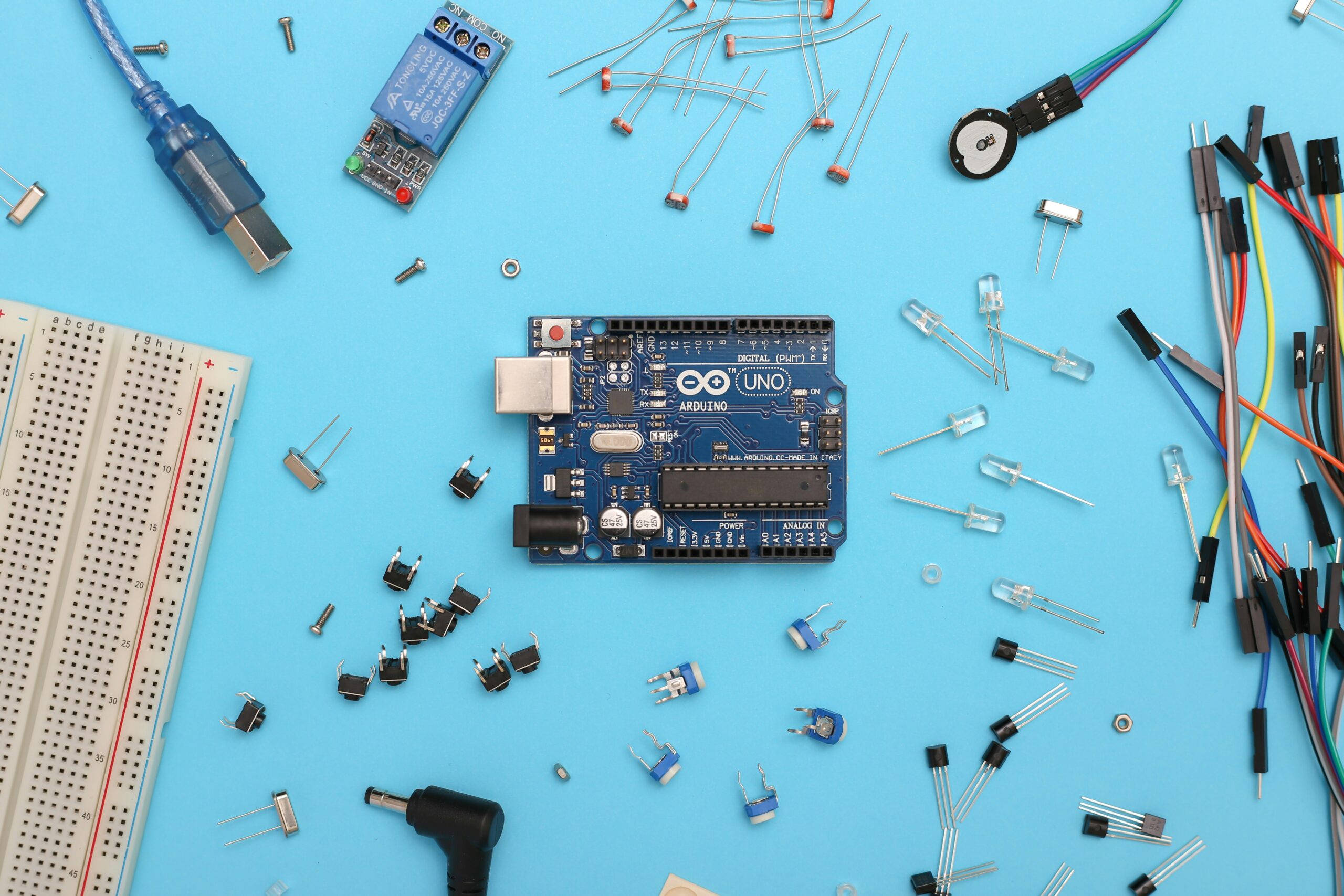
For years, Arduino has occupied a unique place in the technology landscape: a gateway into electronics, embedded programming, and the broader maker culture. Simple, accessible, and open, Arduino became more than a product — it became a movement.
Recently, the narrative around Arduino’s evolving relationship with Qualcomm was often framed as a “sale.” This description, however, is superficial. The real story is about complementary strengths and ecosystem expansion rather than a classic acquisition.
What Is Really at Stake
From a market perspective, this is not just another M&A story. It’s a subtle yet meaningful evolution:
- Qualcomm, a global leader in high-performance SoCs and silicon design, seeks deeper engagement with the world of IoT, embedded AI, and edge computing.
- Arduino, rooted in education and the maker community, had reached a natural ceiling and needed new avenues for growth.
Their collaboration represents the integration of radical simplicity with engineered performance — bridging a historical divide in embedded technologies.
Why Qualcomm Needs Arduino
Qualcomm crafts some of the most advanced chips in the industry — yet these silicon solutions often remain inaccessible to hobbyists, educators, and independent developers, mostly due to tooling complexity and closed ecosystems.
What Qualcomm does not inherently possess is community trust: the emotional, grassroots connection that Arduino built over two decades with developers, educators, and makers worldwide.
Arduino brings to Qualcomm:
- A global base of developers and educators
- A software ecosystem that is accessible and open
- A brand associated with creativity, learning, and experimentation
This connection shortens the gap between powerful silicon and real-world adoption.
Historically, the main barrier to wider Qualcomm SoC adoption outside industrial OEMs has been not silicon capability, but developer ergonomics, toolchain accessibility, and documentation depth.
What Arduino Gains in Return
Arduino’s integration with Qualcomm’s technology opens new avenues:
- Access to powerful processors with genuine embedded AI capabilities
- A pathway into industrial, commercial, and professional use cases
- Increased relevance in a world where simple microcontrollers are no longer sufficient
Snapdragon-class architectures allow Arduino to go beyond its educational roots into advanced prototyping and product-grade applications — without abandoning its core mission.
It is important to note that this evolution does not replace classic microcontrollers in hard real-time or ultra-low-power use cases; rather, it expands Arduino upward into domains that require heterogeneous SoCs and higher compute density.
In this context, Arduino intersects with other platforms like Raspberry Pi or ESP32 — but with a distinct position:
This does not place Arduino in direct architectural equivalence with Raspberry Pi or ESP32, but rather positions it in an intermediate layer, bridging microcontroller-centric workflows and higher-level embedded Linux or edge-AI systems.
The Risk: Losing the Soul
Whenever an open movement grows closer to corporate structures, a central question emerges:
Will Arduino still be Arduino?
Qualcomm’s assurances are reassuring, but the risk is real. If simplicity, openness, and clarity of documentation are sacrificed for proprietary performance gains, the maker community could drift away.
Yet there is a brighter possibility: Arduino could become to embedded computing what Linux became to servers — open at its core, powerful in practice, and widely adopted at industrial scale.
A Broader Perspective
This evolution reflects a deeper structural change in embedded technology:
- The maker becomes a professional
- The hobby becomes a product
- The prototype becomes a business
The boundary between education, innovation, and market viability has never been more fluid — or exciting.
Conclusion
Handled well, the convergence between Arduino and Qualcomm could mark a new chapter in embedded computing, where accessibility and performance coexist harmoniously.
Handled poorly, it could be another cautionary tale of good ideas diluted within corporate structures.
As with most technologies, neutrality lies in the tools. The future will be defined by decisions around governance, openness, and long-term vision — not just hardware..
Written by Renato L. Garzillo — electronics engineer, writer, and entrepreneur.